

Understanding prophetic imagery better
A more realistic examination of Zechariah 14:10

All the land will be made like the ‘Aravah, from Geva to Rimmon in the Negev. CJB version
The following is reasoning from answers to questions made to Perplexity, a free AI search engine. Its answers are shown as block quotes.
How do Isaiah 41:18, Zechariah 14:10, & Ezekiel 36:35 tie together?
Isaiah 41:18, Zechariah 14:10, and Ezekiel 36:35 form a cohesive prophetic triad, each depicting God’s supernatural remaking of Israel’s barren or hostile landscape into a realm of abundance, security, and divine blessing.
All three envision a reversal of desolation tied to God’s redemptive acts:
Isaiah 41 verse 18: God opens “rivers on the bare heights” and turns wilderness into pools and springs—impossible water in elevated, dry places as proof of Yahweh’s power.
Zechariah 14 verse 10: The rugged land around Jerusalem flattens “like the Arabah”, exalting the city as a secure hub for God’s reign.
Ezekiel 36 verse 35: Desolate waste becomes “like the garden of Eden,” with ruined cities rebuilt and inhabited, signaling holistic renewal.
Unified Theological Picture
Together, they paint God’s salvation as total landscape overhaul—from arid hostility (highs/lows/deserts) to paradisiacal order (water, flatness, gardens)—preparing a people and place for His unchallenged presence, often linked to temple renewal or eschatological hope.
Can the Arabah be talking about the flood plain of the Jordan river?
Yes, the Arabah in Zechariah 14:10 directly encompasses the flood plain of the Jordan River.
What I was getting at here is that flood plains are rich and fertile. The Judean hills will become rich and fertile farm land—especially designed for grazing livestock according to some prophecies. Other prophecies talk about the rivers and a major highway. I can’t imagine the waterfalls off the edge. And then there’s the massive rivers coming out of the temple which will make the Dead Sea into fresh water filled with fish, with an equal river headed for the Mediterranean.
Arabah Geography
The “Arabah” (or ’Aravah) refers to the entire southern section of the Jordan Rift Valley, stretching from the Dead Sea [ED: see below, from the Sea of Galilee] southward to the Gulf of Aqaba—a vast, arid depression averaging 10-12 miles wide with steep walls rising 1,000m on both sides.
Northern part (most relevant to Zechariah): The Jordan Valley, where the Jordan River flows from the Sea of Galilee through its Zor—the narrow inner flood plain (about 1/2 mile wide, overgrown with brush, floods seasonally as in Joshua 3:15).
Bible calls the Dead Sea the “Sea of the Arabah,” confirming the Jordan Valley as “Arabah” territory (Deut 4:49; Josh 3:16).
Zechariah 14:10 Connection
When it says “all the land… shall be changed into a plain from Geba to Rimmon south of Jerusalem,” it’s invoking this broad, level rift valley (Arabah/Jordan Valley) as the model: Jerusalem’s surrounding hills flatten into something equally open, low, and traversable—no more barriers, fully accessible for God’s reign.
So yes—the Jordan’s flood plain is the heart of biblical “Arabah” imagery, a real topographic feature symbolizing total leveling and openness.
My question was directed at the truth that a flood plain is rich fertile land suitable for farming. Geba to Rimmon covers all of Judah.
What was the climate of what we now call the Holy Land in Joshua’s time?
The Holy Land during Joshua’s time (roughly late 15th or 13th century BCE) had a Mediterranean climate similar to today but wetter overall, with more forests, higher rainfall (especially in the north and highlands), and less desertification than modern conditions.
Two seasons: Rainy/wet (mid-October to mid-April, with heaviest rains December–February causing Jordan River flooding as in Joshua 3:15) and dry/summer (June–September, hot but breezy with rare rain).
Regional variation: Northern Galilee and central hills saw 20–40+ inches annual rain, lush with oaks, wildflowers, grains, olives, grapes, and forests (Josephus later describes dense vegetation). Jordan Valley/Arabah was arid steppe/desert but with seasonal river flooding and oases. Negev/South was semi-arid but wetter than today, supporting more settlements.
The Middle Bronze Age (Joshua’s era): was cooler, more humid—rivers fuller, pollen shows expanded olive/cypress growth, less oak-dominated scrub.
This wetter phase made the “well-watered” plains (Genesis 13:10) plausible, though droughts occurred (e.g., later Gideon’s era). Gradual warming/drying followed, accelerating after 1000 BCE due to deforestation and overuse.
My experience is that 20-40 inches of rain describes what I grew up with living in southern Minnesota. This is excellent for farming, grazing, and lush landscape.
What was the climate of the time of Jesus?
The climate of the Holy Land (modern Israel/Palestine) during Jesus’ time (1st century AD) was Mediterranean, with mild, wet winters and hot, dry summers—similar to today but moderately wetter and greener overall, especially in Galilee, due to less deforestation and desertification.
Seasonal Patterns: Two main seasons dominated:
Winter/rainy (October–April): Cool (40–60°F), with heaviest rains December–February (20–40 inches annually in hills/north, less in south/Jordan Valley). Jordan River flooded seasonally; springs burst with wildflowers, greening hills for grazing and early crops.
Summer/dry (May–September): Hot (80–100°F+ in valleys, milder in hills), cloudless skies, low humidity, breezy—ideal for ripening figs, grapes, olives, but required water storage as rain ceased.
Regional Differences
Galilee: Lush, temperate, spring-watered; orchards, vineyards, walnuts, palms thrived (per Josephus). More forested, fertile than today.
Judean hills & Jerusalem: Moderate rain (25–30 inches), cooler nights; terraced olives, grains.
Jordan Valley: Arid/hot (100°F+), desert-like but with oases; Jericho subtropical for dates, balsam.
Compared to Joshua’s era (~1400–1200 BC), Jesus’ time was drier due to gradual warming and human impact (overgrazing, wars), but still far greener than modern conditions—explaining biblical abundance imagery without extensive irrigation.
So what’s my point?
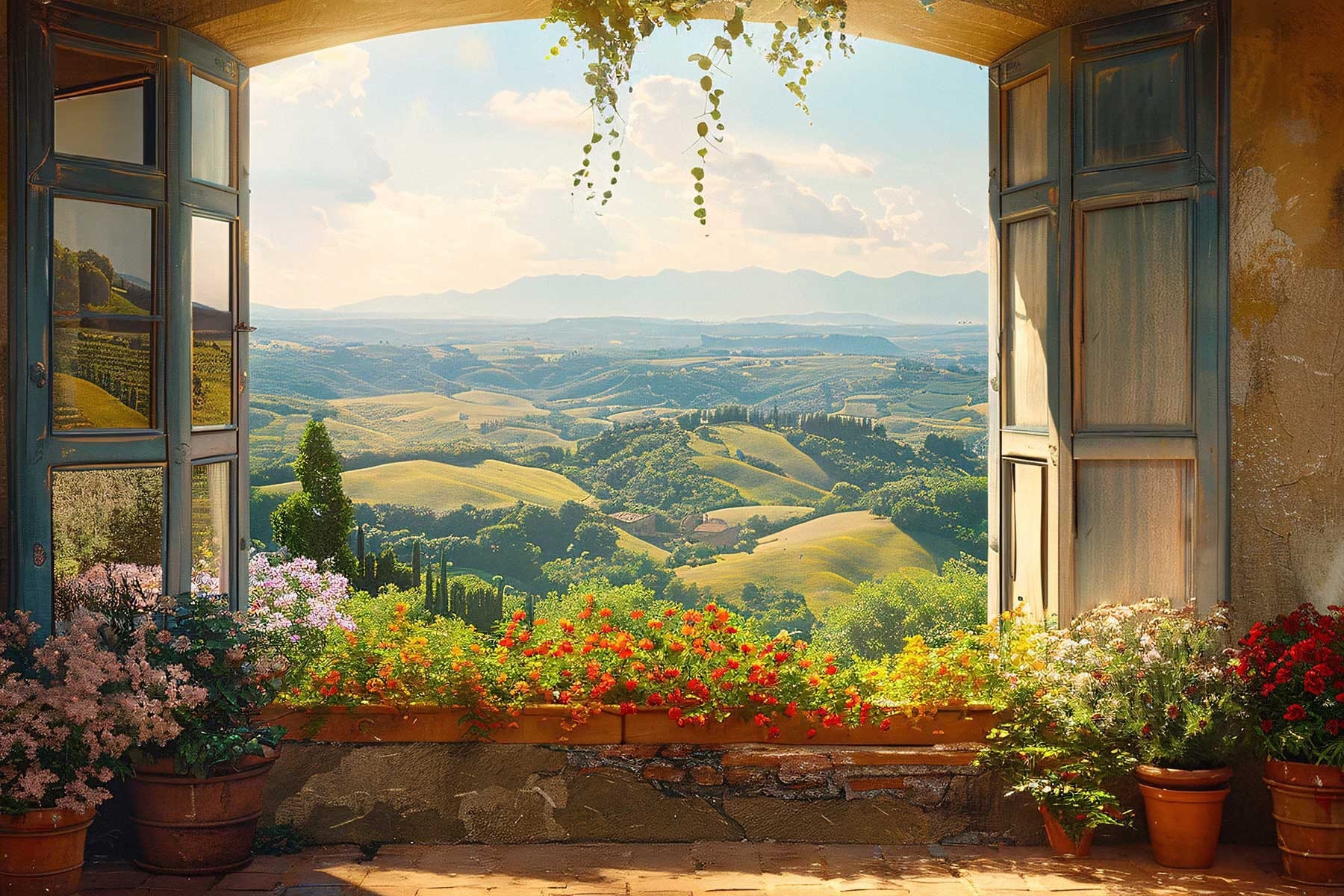
The prophetic landscape was lush compared to now. The scene described in Zechariah 14:10 is describing a lush probably almost temperate climate with rivers flowing throughout a high plateau (which used to be Judah today), with Jerusalem elevated quite bit higher as we read in Ezekiel 45 about the new temple in the millennium. The temple area is a flat area 6.6 miles wide by 8.3 miles long including Jerusalem which is a little over 2 miles square.
Several places make it clear that this new temple area will be the highest place in the new Israel—and probably the highest place on earth. We need to get the idea of the barren Judean wilderness out of our mind. Israel will almost certainly be lush—flowing with milk and honey again. Almost certainly from the Nile to the Euphrates.
I just felt I was supposed to tickle your imagination about the glories of the Millennium.
Coming soon to a planet near you. I’m REALLY looking forward to it. Maranantha! Alleluia.
Thank you for taking the time to share your reflections. I genuinely appreciated the spirit in which you wrote, not merely presenting ideas, but inviting readers to lift their eyes and imagine the goodness of God’s restoration. There is something deeply encouraging about being reminded that Scripture does not end in desolation, but in renewal, abundance, and the nearness of the Lord Himself.
Your connection between Isaiah, Ezekiel, and Zechariah stirred my thinking in a helpful way. The prophets certainly refuse to let us settle for small expectations of what God intends to accomplish. Their language stretches the imagination because God’s redemption is never partial; He restores people, land, worship, and hope together.
As I sat with the passages you highlighted, though, what increasingly struck me was how often the prophets seem to use landscape itself to speak about access to God’s presence. Rivers flowing where none existed, mountains lowered, deserts blooming, all of it seems to echo a deeper promise: that barriers between God and His people are being removed.
Zechariah 14 especially feels beautiful in that regard. The living waters flowing outward from Jerusalem, the light that does not fade, and the nations coming to worship together seem to point toward something larger than geography alone. The climax of the chapter — even ordinary cooking pots marked “Holiness to the Lord” — suggests a world where God’s presence fills everyday life. Sacred and ordinary finally meet.
Whether one understands these promises primarily as a future earthly restoration, a millennial reality, or their ultimate fulfillment in the new creation, the shared hope remains the same: God Himself dwells openly among His people. The prophets seem less concerned with irrigation systems or elevation charts than with a world reordered around worship, holiness, and life flowing from Him.
I appreciated how your article encouraged readers to imagine again. In a noisy and often cynical age, holy imagination anchored in Scripture can be a gift. My own reflection simply leans toward seeing the greatest beauty of these passages not only in a renewed landscape, but in restored communion — the Lord removing every obstacle until the nations themselves gather in peace before Him.
Thank you again for sharing your thoughts and for encouraging believers to look forward with hope. Conversations like this remind me how rich the Scriptures are and how much joy there is in searching them together.
Grace and peace,
Mark